
Walking together in the Daintree
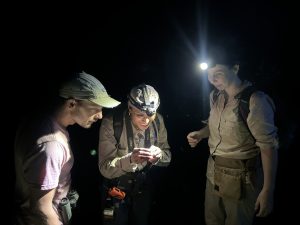
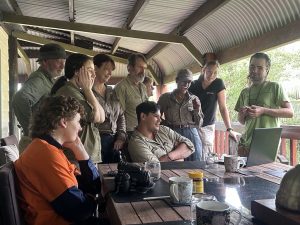
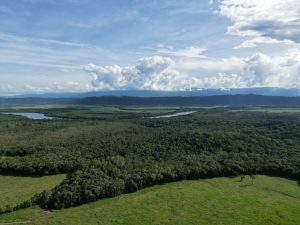
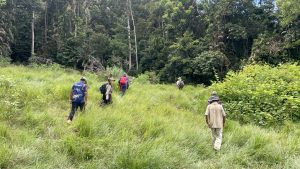
In May, QTFN proudly delivered a valuable event on Eastern Kuku Yalanji Country: a two-day BioBlitz. We worked with local ecology experts and Jabalbina Yalanji Aboriginal Corporation rangers to survey biodiversity at Lot 83 in the Daintree. Funded by an Engaging Science Grant from the Office of the Queensland Chief Scientist, we were able to bring together 22 people to record flora and fauna occurring in parts of the 376-hectare property.
Over the two days, the team logged 760 new species’ records for the property.
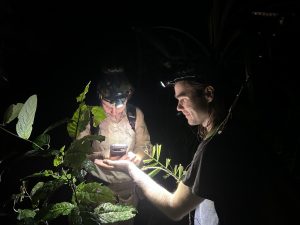
Thanks to Matthew Connors and Caitlin Henderson, two passionate and dedicated local experts, more than half of these new records were invertebrates—an often under-reported group of fauna despite representing well over 90% of all described animal species on Earth. They also found an undescribed Pheidole (big headed ant) species and a new species of pseudoscorpion from the family Scolopendrellidae. This is potentially only the third time that this family of invertebrates has been recorded in Queensland.
The success of the Lot 83 BioBlitz was shaped by the generosity and diversity of people who came together to share their skills, knowledge, and passion. Local ecologists brought their deep expertise in plants, invertebrates, birds, mammals, reptiles, amphibians, and aquatic fauna—providing invaluable insights into the region’s biodiversity. Thank you to Matthew Connors, Alan Gillanders, Caitlin Henderson, Murray Hunt, Jannico Kelk, Emmeline Norris, Torfinn Radcliffe, Allen Sheather, and Carl Shuetrim. We were also fortunate to work alongside Jabalbina Yalanji Aboriginal Corporation rangers, whose knowledge, skills, and perspectives enriched the experience. QTFN’s Nicola Grobler coordinated the event, with support from Senior Ecologist Chagi Weerasena and ‘Friend of QTFN’ volunteer Dr John Rochecouste. This ensured a collaborative and well-managed survey.
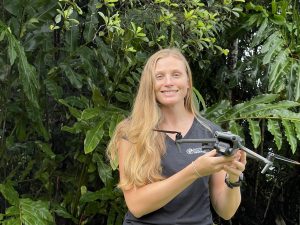
Our expert team of volunteers used observational surveys, camera traps, acoustic recorders, spotlighting, Elliott traps, a harp trap, and a thermal drone during the BioBlitz. We also trialed the groundbreaking airborne environmental DNA (eDNA) technique thanks to our partners at the University of Queensland led by Dr Celine Frere. There were many endemic and threatened species detected, including the endangered southern cassowary (Casuarius casuarius johnsonii), the vulnerable ant plant (Myrmecodia beccarii), and the spiny rainforest katydid (Phricta spinosa). We continue to add observations to iNaturalist and eBird, and the creation of an iNaturalist project for the private property enables future citizen science data collection.
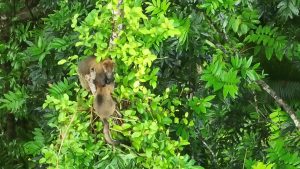
As part of the Lot 83 BioBlitz, James Cook University PhD Candidate Emmeline Norris joined us with a thermal drone to survey the marsupials living high in the canopy. In just four hours of flight time, 14 Bennett’s tree kangaroos (Dendrolagus bennettianus) were recorded—including two mothers with joeys and one with a large pouch young. This is compared with only one sighting using the traditional spotlighting technique. These results highlight the effectiveness of thermal drones and their potential to revolutionise detection and monitoring of elusive species. Working alongside researchers like Emmeline demonstrates how QTFN is embracing emerging tools and technologies that make wildlife monitoring more effective and scalable for long-term biodiversity benefit.
These connections and shared learnings will continue to inspire and strengthen efforts to protect special places like Lot 83.